14.3.2
1. 2024 Campus Health Promotion
2024年校園健康促進
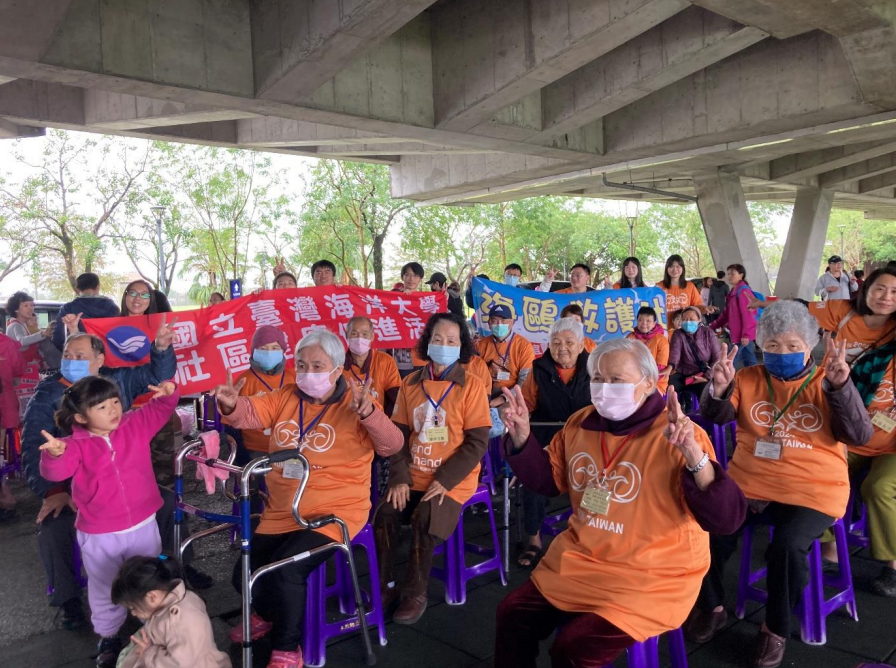
As an essential venue for education and health promotion, the school bears the important responsibility of fostering healthy lifestyles among students. To achieve the goal of building a healthy campus, a series of comprehensive health promotion programs have been developed. Through diverse activities and cross-sector collaboration, these initiatives have significantly enhanced the health awareness and quality of life of both faculty and students. Our department conducts freshman health examinations and health surveys to identify key health promotion issues. These issues encompass various aspects of student health—from daily diet and lifestyle habits to responses to sudden illnesses. By integrating on-campus units with external resources, as well as guiding student clubs to participate in organizing related activities, the school actively promotes health policies and plans diverse programs that help faculty and students enhance their health literacy, cultivate healthy lifestyles, and develop self-directed health management skills, thereby improving overall health levels. Throughout the implementation process, a total of 49 health promotion events were organized, including weight management programs, tobacco hazard prevention campaigns, smoking cessation classes, HIV/AIDS prevention and testing, food service training sessions, blood donation drives, first aid training, and infectious disease awareness programs. In the area of food hygiene, the school has also strengthened inspections of dining facilities and the traceability of food ingredients to ensure compliance with government regulations. Programs such as weight management and smoking cessation attracted participants who are proactive about their health, while HIV/AIDS prevention, infectious disease awareness, and vaccination campaigns have enhanced disease knowledge and prevention capacity. First aid training further improved participants' ability to respond to emergencies. In total, 8,018 person-times took part in these health promotion activities—reflecting not only high participation but also meaningful improvements in health awareness and behavioral change. Health promotion efforts extend beyond the campus to the broader community through collaboration with local government agencies and community organizations, such as the Keelung City Health Bureau, Zhongzheng District Health Center, and community day-care centers. The school also works with student clubs to provide services for community elders, further expanding the reach of health promotion. This extension from campus to community demonstrates the broad impact and sustainability of the school's health promotion initiatives.
Sustainable Impact: The university’s health promotion program extends its impact from campus to community, integrating environmental and health awareness into education and outreach. This initiative echoes SDG14.3.2, promoting sustainable and environmentally responsible health education that links public well-being with marine and ecological sustainability.
學校作為教育與健康促進的重要場所,肩負著培養學生健康生活型態的重任。為實現健康校園的目標,制定一系列的健康促進計畫,並透過多元的活動和合作,顯著提升師生的健康意識和生活品質。本組辦理新生入學健康檢查與健康問卷調查,確立健康促進議題,議題涵蓋學生健康的各方面,從日常飲食和生活習慣到疾病的突發應對,通過整合校內單位與校外資源,以及指導學生社團鼓勵參與活動辦理,透過健康政策推動及規畫多元活動,帶動師生同仁增進健康知能,培養健康生活型態,達到自主健康管理,提升整體健康水平。在實施過程中,辦理健康增重減重班、菸害防制宣導、戒菸健康班、愛滋病防治及篩檢、餐飲從業人員講習、愛心捐血、急救訓練及傳染病宣導等49場次的健康活動;在餐飲衛生部分更是積極進行餐飲場所衛生檢查及食品原物料來源查核確保食物來源遵守政府法規。健康體位活動和戒菸健康班吸引關心自身健康的師生參加,而愛滋病防治及篩檢、傳染病宣導、疫苗注射活動提高師生對疾病的認識和預防能力。急救訓練則提升了大家在面對突發事件的應對能力。統計共有8,018人次參與這些健康促進活動,成果體現不僅在參與人次上,更在於健康意識的提升和健康行為的改變。健康促進的活動不僅侷限於校內,還延伸到了社區,與當地政府機構和社區團體如基隆市衛生局、基隆市中正區衛生所及社區日照中心合作,使得活動在校園外部也得到推廣,另外與學生社團的合作推動社區長者服務,進一步擴大了健康促進的影響範圍,這種從校園到社區的延伸,展示了健康促進活動的廣泛影響力和持續性。
永續影響力:本校健康促進計畫從校園延伸至社區,將環境與健康意識融入教育與推廣活動。此計畫呼應 SDG 14.3.2,推動永續且具環境責任的健康教育,結合公共福祉並推廣海洋及生態永續的理念。

Evidence:
https://stu.ntou.edu.tw/p/405-1023-118023,c10827.php?Lang=zh-tw
2. Early Career Ocean Professional (ECOP) Listening Sessions
早期職業海洋專業人士 (ECOP)聆聽工作坊
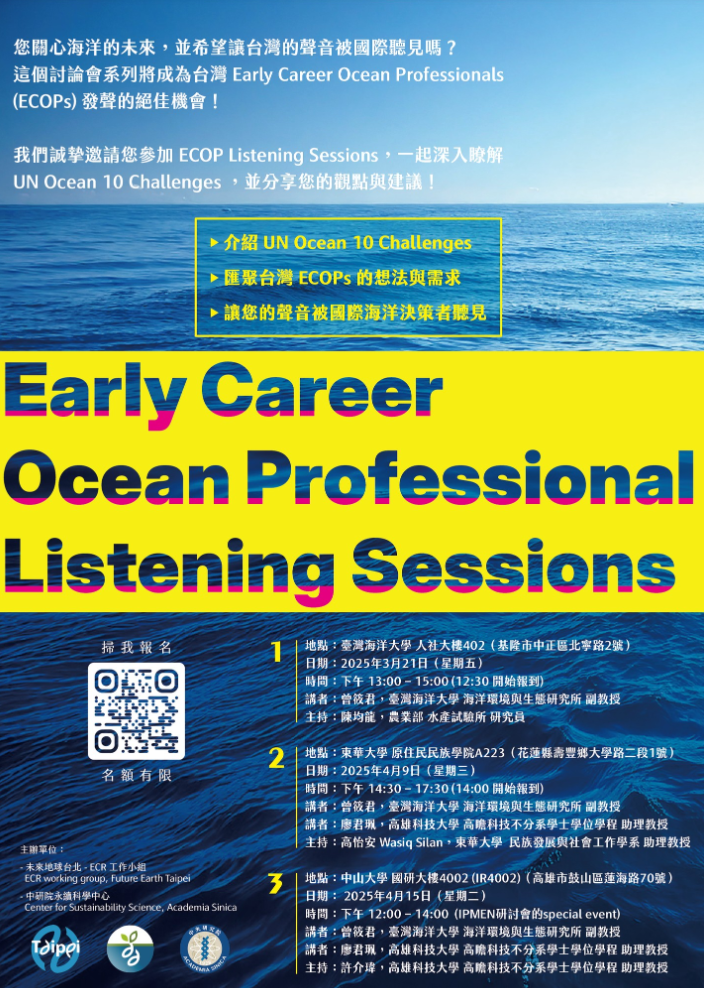
The listening sessions revealed that youth from diverse backgrounds in Taiwan—ECOPs, Indigenous youths, and young Ocean Educators—share strong concerns about marine pollution and ecosystem degradation. Across all groups, ‘Challenge 1: Understand and beat marine pollution' and ‘Challenge 2: Protect and restore ecosystems and biodiversity' were consistently ranked among the top three priorities. While the third priority varied, each group brought unique perspectives shaped by their experiences and professional or cultural contexts. All participants acknowledged that Taiwan has demonstrated significant strengths in marine ecosystem restoration and possesses the capacity to contribute valuable expertise and technology to global ocean sustainability. However, over 60% of ECOPs and Indigenous youth participants had never heard of the UN Ocean Decade, largely due to Taiwan's exclusion from formal UN processes. Despite Taiwan's fisheries and shipping sectors ranking among the top globally, it remains excluded from many international negotiations, resulting in a critical gap in global ocean data and perspectives. The participants called for more inclusive and culturally grounded ocean governance that integrates the knowledge and efforts of non-state actors, including Indigenous communities. Their collective messages urge that Taiwan's marine expertise and perspectives be meaningfully included in international dialogues—ensuring ocean sustainability efforts reflect diverse voices and local realities.
Sustainable Impact: The dialogue promoted awareness of ocean pollution, ecosystem degradation, and inclusive governance among Taiwanese youth. By integrating Indigenous knowledge and emphasizing marine ecosystem restoration, this initiative echoes SDG 14.3.2, fostering education and collaboration that strengthen public engagement and resilience in sustainable ocean stewardship.
聆聽環節發現,來自不同背景的台灣青年——環保青年、原住民青年和青年海洋教育者——都對海洋污染和生態系統退化有著強烈的擔憂。在所有群體中,「挑戰一:了解並戰勝海洋污染」和「挑戰二:保護和修復生態系統與生物多樣性」始終位列三大優先事項之列。雖然第三個優先事項各不相同,但每個群體都根據自身的經驗、專業或文化背景提出了獨特的觀點。所有參與者都承認,台灣在海洋生態系統修復方面展現出顯著優勢,有能力為全球海洋永續發展貢獻寶貴的專業知識和技術。然而,超過 60% 的環保青年和原住民青年參與者從未聽說過聯合國海洋十年,主要是因為台灣被排除在聯合國正式進程之外。儘管台灣的漁業和航運業在全球名列前茅,但它仍然被排除在許多國際談判之外,導致全球海洋數據和觀點有重大缺口。與會者呼籲更具包容性、以文化為基礎的海洋治理,整合包括原住民社群在內的非國家行為體的知識和努力。他們共同呼籲,將台灣的海洋專業知識和觀點有效納入國際對話,確保海洋永續發展努力反映多元聲音和本土現實。
永續影響力:本次對話提升台灣青年對海洋污染、生態退化及包容性治理的認識。透過結合原住民知識並強調海洋生態修復,此活動呼應 SDG 14.3.2,推動教育與合作,強化全民參與與海洋永續管理的韌性。
Evidence:
https://www.facebook.com/photo.php?fbid=691210616572785&id=100070515593897&set=a.220356423658209
3. Guidance for Establishing a Friendly Aquaculture Production Model (Year 3)
輔導建立友善養殖生產模式(第三年)
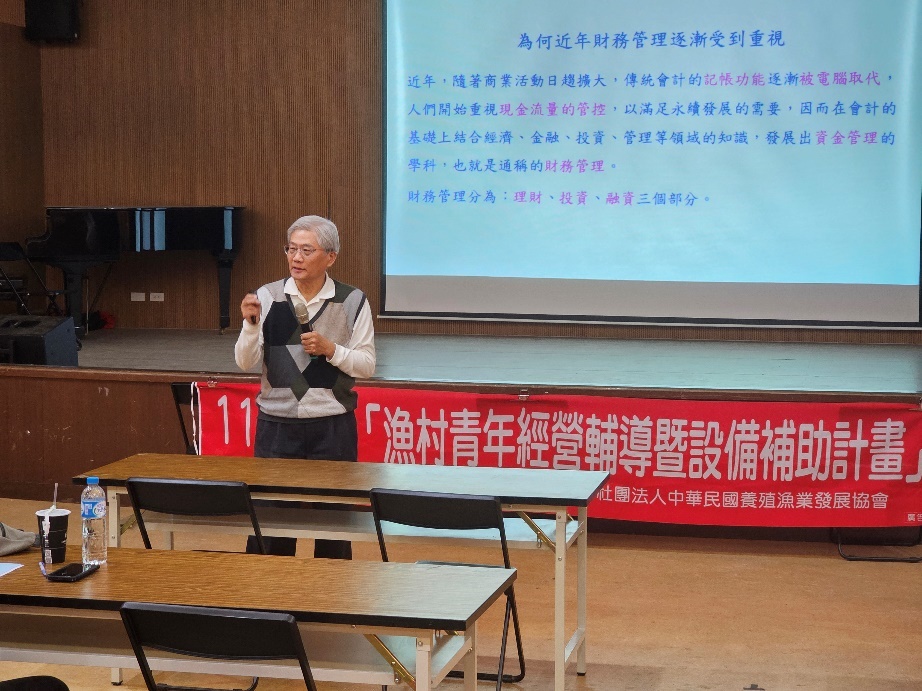
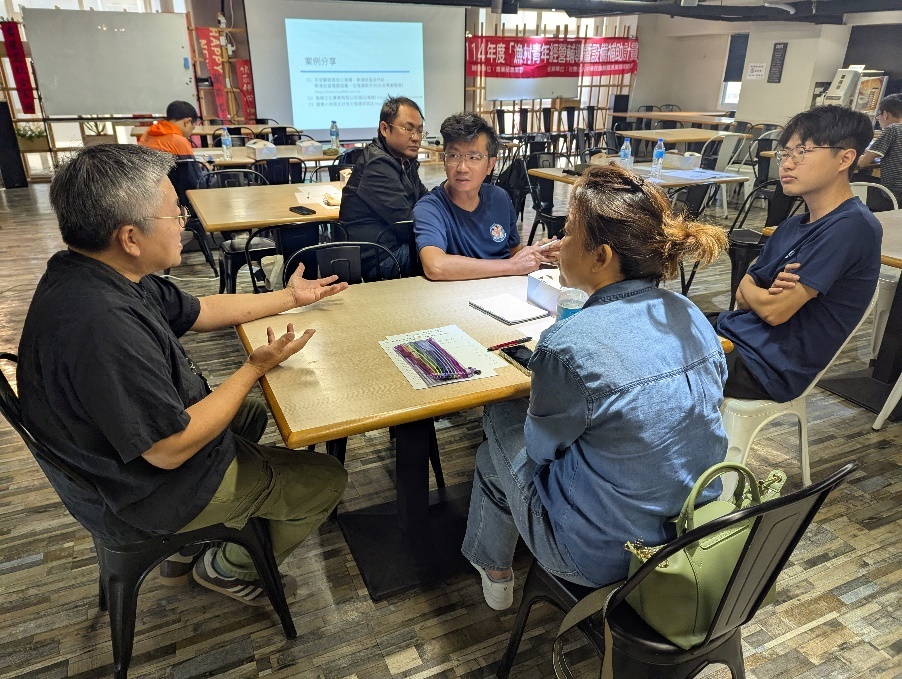
Changhua's coastal areas boast rich and diverse ecosystems and fishery resources. The Changbin area has developed industrial zones, while the Hanbao, Wanggong, and Yongxing areas have reclaimed land for fish pond aquaculture, yet still retain Taiwan's largest mudflat wetlands and natural coastal landscapes. Changhua is one of Taiwan's main aquaculture production regions, with hard clams being the primary species farmed. The coastal aquaculture area in Changhua County spans nearly 1,600 hectares, primarily concentrated in Fangyuan Township (about 1,200 hectares), with several hundred hectares also in Fuxing and Shengang Townships. In recent years, extreme climate impacts (temperature fluctuations, sudden heavy rains, water shortages), combined with long-standing improper human management practices (overstocking, deteriorating nearby water sources), have led to poor aquaculture results and declining profits, severely affecting fishermen's livelihoods. The frequent abandonment of farming due to losses is detrimental to the industry's sustainable development. Under the guidance of the Fisheries Agency and the county government, the "Changhua County Aquaculture Youth Association" was established to integrate local youth energy and drive regional added-value growth. Founded in October 2020, it currently has 67 members spread across Changhua's three major aquaculture production areas: Hanbao, Wanggong, and Yongxing (see Figures 1, 2, 3). Given the escalating impacts of climate change making aquaculture management increasingly difficult, traditional experience-based methods can no longer cope with the unpredictable climate variations. Moreover, most association members have not received formal aquaculture education and training, making it challenging to effectively assess and address the challenges and issues arising during the aquaculture process, leading to unstable cultivation rates and difficulty improving operational performance. According to the United Nations Sustainable Development Goals (SDGs), sustainable and safe seafood supply chains have become an international development trend. However, most aquaculture operators pursue the highest profit per unit area, primarily adopting high-density intensive aquaculture models, with excessive feed and drug use, causing significant harm to aquaculture organisms and the ecological environment, and raising concerns about the quality and safety of seafood products.
Sustainable Impact:The Changhua Young Aquaculture Alliance promotes sustainable aquaculture through education, technology transfer, and adaptive management. By integrating environmental awareness and climate resilience into local aquaculture, this initiative echoes SDG14.3.2, advancing eco-friendly production practices that balance marine resource use with ecosystem protection.
彰化沿海擁有豐富多樣的生態與漁業資源,彰濱一帶有已開發之工業區,漢寶、王功與永興區多填海作為魚塭養殖使用但仍保有臺灣最廣大的泥灘濕地與自然海岸地景。彰化地區為我國養殖漁業主要產區之一,區內以文蛤為大宗養殖物種,彰化縣沿海養殖文蛤近1,600公頃,主要集中在芳苑鄉,多達1,200公頃,福興鄉和伸港鄉也有幾百公頃。近年因受極端氣候衝擊影響(溫差、突然性暴雨、缺水)加上長久以來人為管理方式不當(放養密度過高、附近水源惡化),導致養殖成效不佳收益逐年下滑,嚴重影響漁民生計,因不堪虧損而棄養之情事頻繁發生,不利產業永續發展。日前在漁業署及縣政府輔導下,成立「彰化縣養殖青年聯誼會」,希望整合在地青年能量帶動區域加值成長,成立於民國109年10月,現有會員67位,遍布彰化三大養殖生產區:漢寶養殖生產區、王功養殖生產區、永興養殖生產區,有鑑於近年氣候變遷衝擊加劇導致養殖管理日趨艱難,沿襲傳統之經驗法則已無法應付詭譎多變之氣候變化,加諸大部分聯誼會成員均未受過正規養殖教育訓練,對於養殖過程中所產生之挑戰與問題變化無法做出有效判斷與處置,導致育成率不穩,經營績效難以提升。 依據聯合國永續發展目標(SDGS),永續、安全之水產品供應鏈已成為國際發展趨勢,惟大部分養殖業者為追求單位面積最高獲利,多以高密度集約養殖模式為主,大量餌料投餵及藥物使用,對養殖生物及生態環境造成莫大危害,同時也產生水產品品質及安全性不佳之疑慮。
永續影響力:「彰化青年養殖聯盟」透過教育、技術轉移與調適管理推動永續養殖。此計畫將環境意識與氣候韌性納入地方養殖實踐,呼應SDG14.3.2,推動兼顧海洋資源利用與生態保育的環境友善生產模式。
Evidence:
https://www.fish1996.com.tw/4-1-7.html
4. 2024 World Oceans Day Fish Fry Ecological Release Event
2024世界海洋日放流活動
Here is the English translation of the story-based summary from the perspective of National Taiwan Ocean University (NTOU): Translating Knowledge into Action: NTOU USR Team Leads Marine Education and Ecological Stock Release at Yehliu Under the banner of the 2024 World Oceans Day theme, "Awaken New Depths," National Taiwan Ocean University (NTOU) once again demonstrated that a university is not just a repository of knowledge but a critical driver of marine sustainable development through tangible action. The NTOU USR (University Social Responsibility) Team, in collaboration with partners including the Taiwan Ocean Conservation and Fisheries Sustainability Foundation and the Fisheries Agency, successfully hosted a "Fish Fry Ecological Release Event" on June 7th at the Neptune Pier area in Yehliu, New Taipei City. For NTOU, this event was more than just a response to government policy; it was a prime location for implementing the USR project and cultivating the future talents of the marine sector. Extending Education from the Classroom to the Coast: NTOU firmly believes that marine education must be rooted early. Under the guidance of Vice Minister Huang Chao-Chin of the Ministry of Agriculture, the event specifically invited students from Yehliu Elementary School to participate. Together, they released healthy native species—including Yellowfin Seabream, Scribbled Snapper, and Ornate Spiny Lobster—into the ocean. Through explanations and guidance on the correct stocking mechanisms provided by the Department of Tourism faculty and students, the children personally experienced the scientific conservation principle of "releasing the right species in the right way, at the right time and location." This effort successfully planted the seeds of sustainable fisheries resource utilization in young hearts. Validating Effectiveness with Scientific Assessment: As a leading oceanographic institution, NTOU has a long history of cooperation with the Fisheries Agency, utilizing advanced technologies like gene molecular markers to evaluate the effectiveness of stock release. Research has confirmed that, over the past five years, over 40% of certain economically valuable species caught in the wild originated from these healthy released fingerlings. This provides solid scientific evidence for resource enhancement and highlights NTOU's crucial academic contribution to boosting marine productivity and generating "Three-L" positive spillover effects (Ecology, Livelihood, and Production). National Taiwan Ocean University is committed to continued collaboration with various partners to safeguard coastal habitat environments. Simultaneously, these practical fieldwork opportunities provide valuable industry experience for students, ensuring NTOU contributes both academic wisdom and practical strength to the sustainable development of Taiwan's marine environment and fisheries resources.
Sustainable Impact:The university's USR team, in partnership with the Fisheries Agency and related foundations, organized a marine ecological release event in Yehliu under the World Oceans Day theme "Awaken New Depths." The program aligns with SDG 14.3.2 by promoting marine education through hands-on learning with local students. Its use of genetic tagging to assess release outcomes fulfills SDG 14.3.3, demonstrating scientific collaboration in marine research. The activity supports SDG 14.3.4 by enhancing sustainable fisheries through the release of native species under controlled, science-based methods. Finally, by engaging government agencies, NGOs, and the public in habitat protection and education, it exemplifies SDG 14.5.1's focus on community-based marine conservation, merging academic knowledge with social responsibility and real-world impact.
以知識實踐責任:海大USR團隊在野柳的海洋教育與生態放流課 在2024年「喚醒新深度」(Awaken New Depths)的世界海洋日主題下,國立臺灣海洋大學再次以實際行動,證明大學不僅是知識的殿堂,更是推動海洋永續發展的關鍵力量。 海大USR團隊與臺灣海洋保育與漁業永續基金會、漁業署等夥伴攜手,提前於6月7日在新北市萬里區野柳海王星碼頭,成功舉辦了一場「魚苗生態放流活動」。對海洋大學而言,這場活動不僅是響應政府政策,更是落實大學社會責任(USR)計畫、培育未來海洋人才的最佳場域。將教育從教室延伸到海岸:海大堅信,海洋教育必須從小紮根。本次活動在漁業署黃昭欽次長的示範下,特別邀請野柳國小的學童們共同參與,將健康的黃錫鯛、川紋笛鯛、錦繡龍蝦等原生種苗投入大海。透過觀光系師生對正確放流機制的解說與指導,學童們親身體驗了「在對的時間及地點,用對的方式放流對的魚種」這一科學保育觀念,讓漁業資源永續利用的種子深植人心。以科學評估實踐效益:作為國內頂尖的海洋學府,海大長期與漁業署合作,運用基因分子標識等先進技術評估放流效益。研究結果顯示,過去五年放流的種苗中,部分經濟物種在野外捕撈的比例竟有40%以上來自於這些健康種苗。這不僅為資源增裕提供了扎實的科學依據,更突顯了海大在提升海洋生產力與創造「生態、生活、生產」三生活化外溢效果中的關鍵學術貢獻。國立臺灣海洋大學將持續與各界夥伴合作,共同守護沿近海棲地環境,同時藉由這些實踐場域,為學生提供寶貴的產業連結經驗,持續為臺灣的海洋環境與漁業資源永續發展貢獻學術智慧與實踐力量。
永續影響力:本活動以「魚苗生態放流」為核心,結合野柳國小師生參與與政府、基金會協作,推動海洋教育與社會實踐,符合SDG 14.3.2「提升公眾海洋意識與教育推廣」。透過基因分子標識技術進行放流成效追蹤,展現SDG14.3.3「推動海洋研究合作與科學應用」。活動所釋放的原生種苗與科學化管理機制,呼應SDG 14.3.4「促進永續漁業與資源復育」。最後,藉由USR計畫及跨界夥伴合作,共同守護沿岸棲地並鼓勵民眾參與,具體落實SDG 14.5.1「社區參與式海洋保護與教育」。


Evidence:
5. Phoenix Tours and Yulong No. 8 joined forces to lead ADLINK Technology (or: ADLINK) in a beach cleanup on Keelung Islet.
連結鳳凰旅遊與玉龍捌號帶領瑞傳科技登基隆嶼淨灘
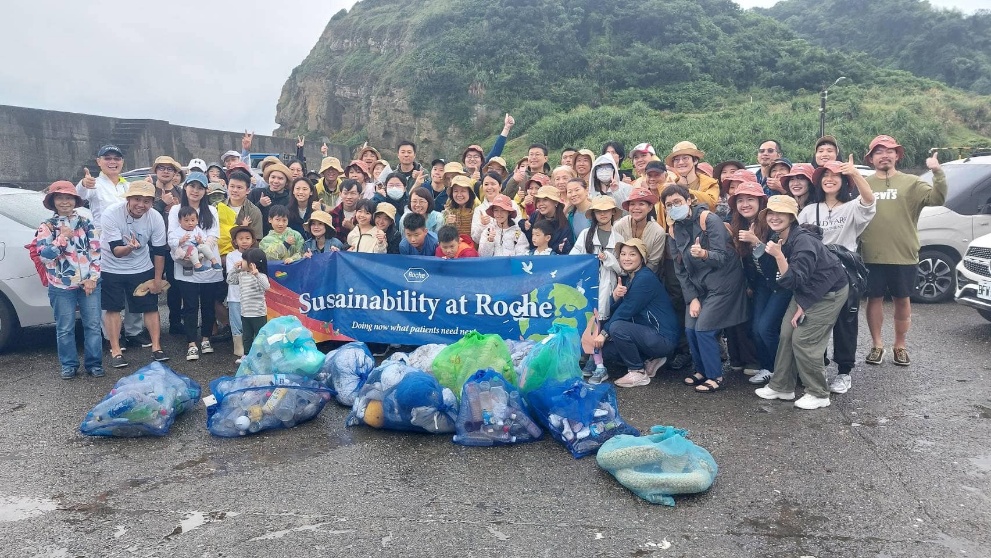
Protecting the "Pearl of Taiwan": NTOU USR Team, Phoenix Tours, and "Yulong No. 8" Continue Five-Year Beach Cleanup Commitment Off the coast of northern Keelung lies Keelung Islet, a volcanic island of mysterious allure. Not only is it home to rare species like Silene morrisonmontana (Keelung Catchfly) and boasts rich geological features, but it is also widely regarded as the "Pearl of Taiwan." However, the accumulation of marine debris poses a persistent threat to this unique beauty. The National Taiwan Ocean University (NTOU) USR Team fulfilled their five-year commitment by once again landing on the islet for a beach cleanup. They were joined by Phoenix Tours (Phoenix International Travel Agency) and the local boat owners of the recreational fishing vessel, Yulong No. 8. This event stands as a prime example of cross-sectoral collaboration, brilliantly integrating University Social Responsibility (USR), Environmental, Social, and Governance (ESG) principles, and island tourism promotion. Despite the Keelung Islet hiking trail being temporarily closed due to damage from the April 3rd earthquake, ocean currents continue to deposit marine debris along the coastline. Professor Wang Hui-Chiao of the NTOU Department of Tourism led the students, personally demonstrating how to categorize the debris using the ICC (International Coastal Cleanup) classification system. The students served as guides, allowing participants to not only experience the islet's geological charm firsthand but also to understand the deep connection between industrial development and environmental sustainability before entering the workforce. This cleanup is a core objective of NTOU's "Three Prosperities of Fishery - International Blue Economy Demonstration Zone" USR project. The faculty and students are driven by a vision to ensure visitors "deeply remember" this stunning island, once one of the Eight Scenic Spots during the Japanese colonial era, through continuous environmental maintenance. With logistical support for waste removal provided by the Keelung District Fishermen's Association, 40 participants, including students, faculty, and industry professionals, worked together to clear debris accumulated along the coast. The effort yielded significant results, with a total of 85 plastic bottles, 7 kilograms of fishing nets, and over 12.5 kilograms of general garbage being collected. The NTOU USR Team firmly believes that only through sustained, collective maintenance can this "Pearl of Taiwan" welcome every visitor with its most pristine and beautiful appearance when the summit reopens, all while continuously supporting local fishermen and promoting the sustainable development of island tourism.
Sustainable Impact: The “Guarding Taiwan’s Dragon Pearl” cleanup project on Keelung Islet, jointly organized by NTOU’s USR team, Phoenix Tours, and local partners, exemplifies the objectives of SDG 14.3.2 and 14.5.3.
Through long-term collaboration between academia, industry, and community stakeholders, the initiative focuses on marine debris removal and environmental restoration, addressing marine pollution and promoting sustainable fisheries management. Students participated in the ICC waste classification process, combining hands-on environmental education with practical sustainability training.
This multi-stakeholder initiative integrates university social responsibility (USR), corporate ESG practices, and eco-tourism development, fostering awareness of the interdependence between industry and ecology. It demonstrates how continuous cooperation can protect marine biodiversity, empower local communities, and sustain Keelung Islet’s role as a model of blue economy and coastal resilience in Taiwan.
守護「臺灣龍珠」:海大USR、鳳凰旅遊與「玉龍捌號」的五年淨灘約定 在基隆北方外海,有一座充滿神秘色彩的火山島——基隆嶼,它不僅擁有「基隆蠅子草」等稀有植物和豐富的地質奇觀,更被譽為臺灣的「龍珠」。然而,海洋廢棄物卻威脅著這份獨特的美麗。 國立臺灣海洋大學USR團隊再次履行了他們的五年約定,偕同鳳凰國際旅行社及在地夥伴玉龍捌號休閒娛樂漁船的船家一同登島淨灘。這不僅是一場環境保護行動,更是一次將大學社會責任(USR)、企業社會責任(ESG)與島嶼觀光巧妙結合的異業合作典範。 儘管近期四月三日的地震導致基隆嶼登山步道受損暫停開放,但海漂垃圾並沒有停止隨洋流堆積。海大觀光系王彙喬老師帶領學生,親自示範如何進行海漂垃圾ICC分類。學生們在淨灘行動中扮演領航員的角色,不僅讓參與者親身感受基隆嶼的地景魅力,更在就業前深刻體認到產業發展與環境永續的密不可分。這次淨灘是海大「三漁興旺-國際藍色經濟示範區」USR計畫的核心一環。師生們懷抱著讓遊客「深深記住」這座曾為日治時期八景之一的美麗島嶼的願景,長期投入環境維護。在基隆區漁會的協助清運下,四十位師生與業者共同努力,成果豐碩:總計清除了八十五支保特瓶、七公斤漁網,以及超過十二公斤的各式垃圾。 海大USR團隊堅信,唯有持續的共同維護,才能讓這顆「臺灣龍珠」在重新開放登頂時,依然以最美好、最純淨的面貌,迎接每一位到訪的遊客,並持續帶動地方漁業與觀光永續發展。
永續影響力:本次「守護臺灣龍珠」基隆嶼淨灘行動,結合海大USR團隊、鳳凰旅遊與在地船家合作,符合 SDG14.3.2、14.5.3 之指標精神。活動以減塑與海漂垃圾清理為主軸,展現學校與社區、企業共同推動海洋污染防治與生態維護的實踐。師生親身參與ICC分類與淨灘行動,落實環境教育、永續漁業與生態旅遊結合之目標,建立公私協力的藍色經濟典範,促進地方產業與環境共榮。

Evidence:
6. Intelligent Aquaculture Feeding Equipment and System Design
智慧化水產養殖投料機具及系統開發應用
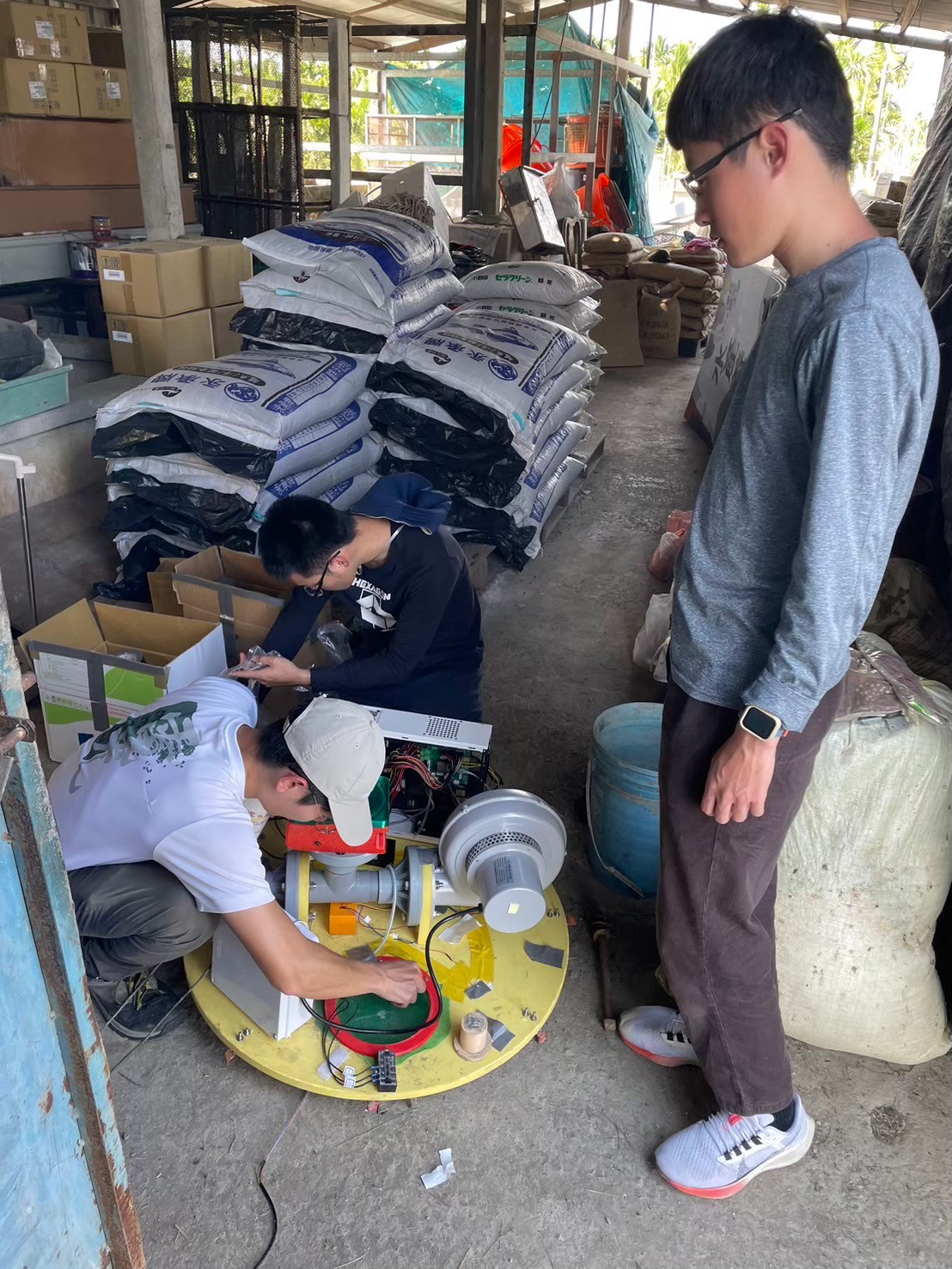
Threadfin is a high-value marine food fish. According to the Taiwan Fisheries Department''s Annual Report on Fisheries Statistics 2023, the annual production of fish is approximately 13,200 tonnes, with an annual production value of NT$2.57 billion. In recent years, the aquaculture industry has faced threats such as extreme weather, depletion of near-shore fishery resources, and an aging workforce, making introducing artificial intelligence solutions in aquaculture an inevitable trend. China, South Korea, Japan, Norway, the United States, the European Union, Canada, Australia, and Taiwan primarily develop artificial or semi-automatic aquaculture technologies worldwide. Due to the high proportion of individual aquaculture farms in Taiwan, the relatively high costs of fishpond acquisition, as well as the difficulty in recruiting workers, and the lack of high-tech talent willing to take over traditional aquaculture models due to the declining birth rate, the industry''s competitiveness has been insufficient. One of the shortcomings of traditional automatic feeders is the inability to determine the remaining feed quantity and the amount of feed ejected. Therefore, our team uses a self-designed weighing module and laser ranging module to estimate the remaining feed quantity in the feed hopper and the amount of feed ejected. At the same time, the smart feeder uploads this information to a cloud database, allowing aquaculture farmers to know the actual feeding situation and establish a concrete aquaculture strategy. Considering the possibility of feed breakage affecting feeding, the smart feeder uses wind power as its power system. Since a large amount of feed will be fed in the late stage of aquaculture, there is a possibility of feed accumulating at the bottom of the feed hopper, causing blockage. Therefore, our team uses a controllable roller to create disturbances to prevent blockage and adds a device that can adjust the size of the bottom opening, allowing aquaculture farmers to adjust according to the feed size. To improve the problem that traditional automatic feeders cannot control the feeding direction, our team designed a cloud platform consisting of a main mechanism and a rotating nozzle. The main mechanism controls the rotation of the rotating nozzle, and the rotation angle is 0 to 180 degrees. There are two modes: Mode 1, back-and-forth scanning; Mode 2, specific angle projection. This mode will cooperate with water splash recognition to achieve precise feeding. The goal of this system is to promote and apply the previously established smart aquaculture system technology in land-based aquaculture farms where electricity and communication are more convenient. The previous automatic feeding system is miniaturized and lightweight, and the feed quantity and position can be adjusted according to the fish''s water splash analysis. Coupled with the communication network, it can be more easily integrated with AI aquaculture strategies and management. In addition, the aquaculture data is recorded in the form of data to promote and try to solve the operating model of aquaculture farmers.
Sustainable Impact:The development of an AI-powered smart feeding system for aquaculture aligns with SDG14.2.2, 14.3.1, and 14.3.2.
By integrating AI algorithms, weight and distance sensors, and cloud-based monitoring, the system optimizes feeding precision, minimizes feed waste, and reduces water pollution. These innovations contribute to climate adaptation, emission reduction, and sustainable resource management in the aquaculture sector.
In collaboration with local fish farmers, the project applies data-driven management to improve production efficiency and resilience to climate challenges. It promotes cleaner aquaculture practices, supports ecosystem conservation, and demonstrates how technological innovation can drive both economic viability and environmental protection. This initiative embodies a model of sustainable blue economy through academic–industry collaboration and digital transformation for marine and climate sustainability.
午仔魚為高經濟價值之海水食用魚類,根據2023年漁業署漁業統計年報資料午仔魚年產量大約1.32萬公噸,年產值約達25.7億元新台幣。近幾年水產養殖業面對極端氣候、近海漁業資源枯竭、從業人口高齡化等威脅,養殖業導入人工智慧解決方案乃大勢之所趨。世界各國之人工或半自動養殖技術,大都由中國、韓國、日本、挪威、美國、歐盟、加拿大、澳洲及臺灣提出。由於臺灣的水產養殖業個體養殖戶比例高,相對魚塭取得成本也偏高,加上少子化的影響導致現今招工不易及高科技人才鮮少願意承接傳統水產養殖模式等等因素,養殖的產業競爭力不足。 傳統的自動投料機缺點之一就是不知道剩餘飼料量與射出飼料量,因此本團隊使用自行設計的秤重模組與雷射測距模組來推算儲料桶剩餘飼料量與射出飼料量。同時智慧投餌機會把這些資訊上傳至雲端資料庫,讓養殖業者得知實際的餵食情況,好建立具體的養殖策略。考量到飼料容易破碎造成攝食情況不理想的可能,智慧投餌機使用風力作為動力系統。由於水產養殖後期會投餵大量的飼料,會有飼料堆積於儲料桶底部造成堵塞的可能,因此本團隊使用一可控滾輪造成擾動避免堵塞,同時加入可調整底部開口大小的裝置,讓養殖業者可以根據飼料大小自行調整。為了改善傳統的自動投餌機不能控制投餌方向的問題,本團隊設計了包含主要機構與旋轉噴頭兩個部分的雲台,主要機構控制旋轉噴頭轉動,旋轉角度為0到180度,有兩種模式,模式一,來回掃射;模式二,特定角度投射,此模式會配合水花辨識進而達成精準投料。 本系統的目標是在電力與通訊更加方便的陸上養殖場域下,結合以往建立的智慧養殖系統技術做推廣與應用,將之前自動射料系統加以小型化、輕量化,可依魚隻水花分析調整射控料量與位置,再搭配通訊網路,更能方便結合AI的養殖策略與管理。另外以數據的形式記錄養殖資料,推廣並試圖解決養殖業者問題的經營模式。
永續影響力:本團隊開發智慧投餌系統,結合 AI 與感測技術以改善傳統養殖效率,符合 SDG14.2.2、14.3.1、14.3.2 之永續指標。此系統透過數據化管理、雲端監控與精準投餌,降低飼料浪費與水體污染,促進減碳與氣候調適。同時藉與地方養殖業者合作推廣智慧化生產,提升產業韌性與海洋環境永續。此研究兼具技術創新、教育推廣與環境保護效益,展現產學合作落實藍色經濟與低碳永續之具體實踐。
Evidence:
7. Investigation on aquaculture carbon sink and establishment of measurement methodology
養殖漁業碳匯調查及建立量測方法學研究
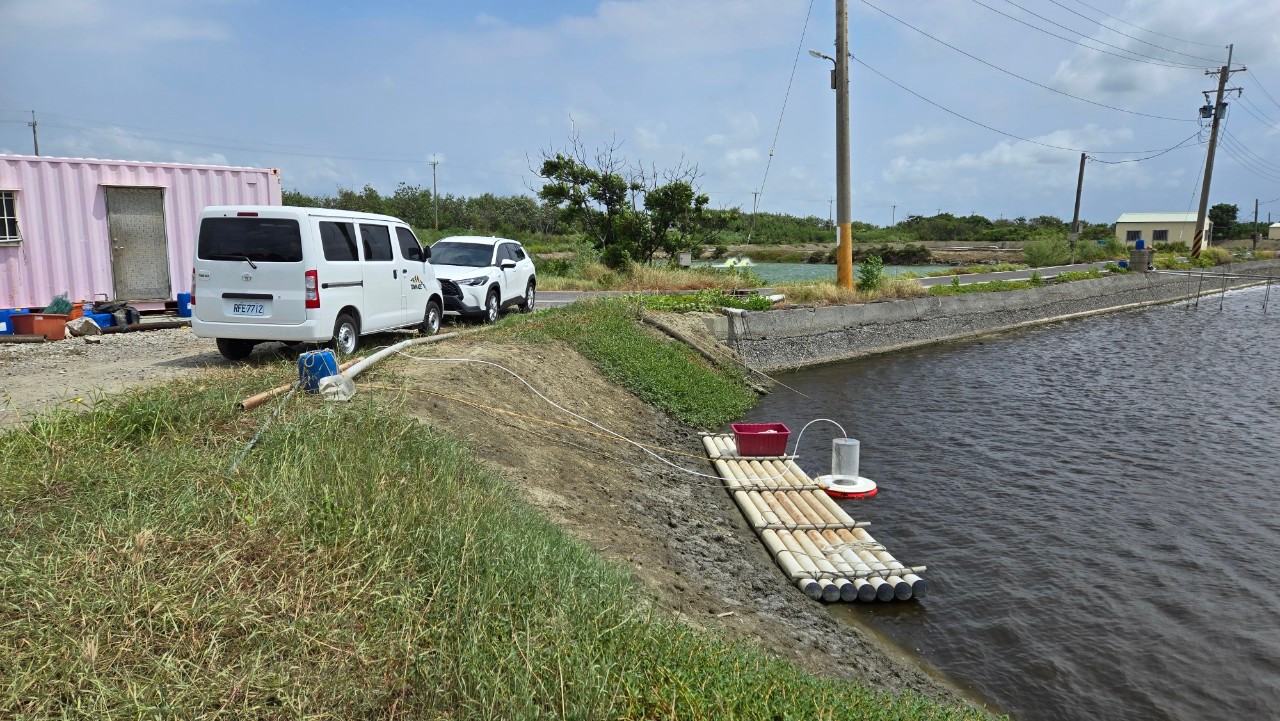
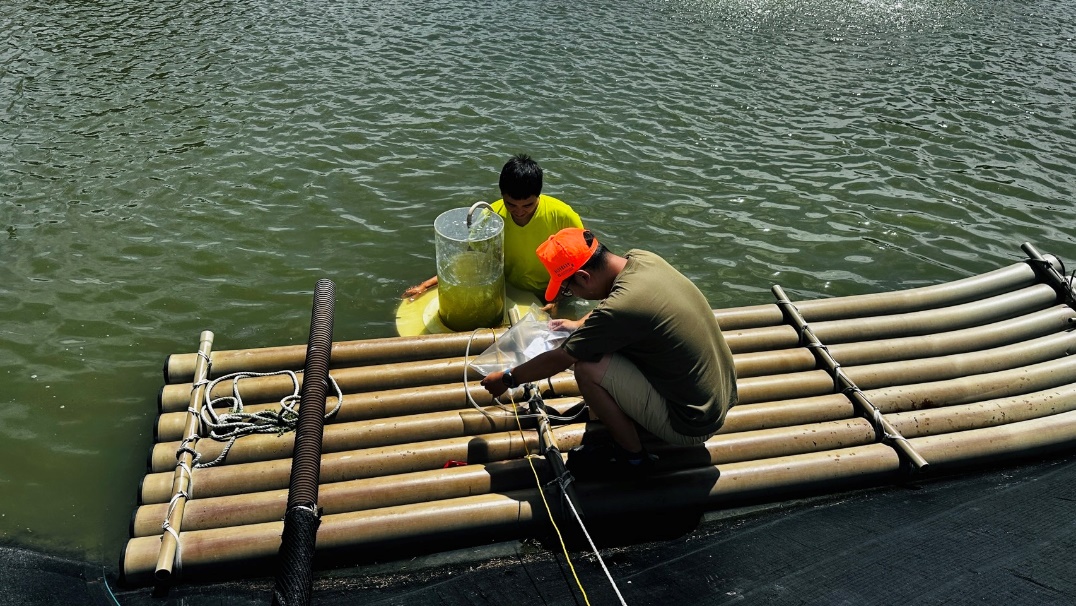
Due to the absence of a matching Monitoring, Reporting, and Verification (MRV) mechanism in our country, the national greenhouse gas emissions inventory has yet to establish wetland-related carbon sink data. In order to understand the overall carbon sink variations and potential reductions in emissions in our country, as well as to adhere to the three core principles (measurable, verifiable, and reportable) and five key characteristics (additivity, conservatism, permanence, avoidance of harm, and avoidance of double counting) required for future voluntary reduction projects, this project will focus on carbon sinks in aquaculture, including the milkfish and sea bass farming industries. We will measure the greenhouse gas emissions and carbon sinks in water bodies and sediments, and analyze their local coefficients. The goal is to accurately estimate the carbon sink or carbon source capabilities of wetlands in line with the international trend towards net-zero emissions and to achieve the domestic net-zero emissions policy objectives.
Sustainable Impact: This project addresses the current gap in Taiwan’s national greenhouse gas inventory, which lacks wetland carbon sequestration data. It focuses on measuring greenhouse gas emissions and carbon storage in milkfish and seabass aquaculture systems, including both water and sediment compartments, to establish localized carbon coefficients. The study supports the development of Taiwan’s Monitoring, Reporting, and Verification (MRV) framework and aligns with the three key MRV principles—measurability, verifiability, and reportability—as well as the five essential attributes of carbon management: additionality, conservativeness, permanence, avoidance of leakage, and prevention of double counting.
The outcomes will enhance national understanding of wetland carbon fluxes, inform voluntary mitigation programs, and contribute to net-zero strategies under SDG 13.3–13.4. Simultaneously, the research advances sustainable aquaculture and coastal wetland carbon management, aligning with SDG 14.2–14.3. By quantifying blue carbon potential and integrating it into national climate policy, this project builds a scientific foundation for low-carbon aquaculture and climate-resilient marine ecosystems in Taiwan.
因我國尚未建立相符之監測、報告與驗證機制(MRV),國家溫室氣體排放清冊尚未建立濕地相關碳匯量數據,為了解我國整體之碳匯變動量及可減少之排放量,以及未來自願減量專案中所需之三大原則(可量測、可驗證、可報告)和五大特性(外加性、保守性、永久性、避免產生危害及避免重複計算),本案將針對養殖漁業碳匯,包含虱目魚及鱸魚養殖產業,進行水體及底土之溫室氣體與碳匯量測,並分析其本土係數,期望可精確的推估濕地的碳匯或碳源能力,以符合國際淨零排放趨勢及達到國內淨零排放政策目標。
永續影響力:本計畫針對我國尚未納入國家溫室氣體清冊之「濕地碳匯」議題,進行養殖漁業(虱目魚與鱸魚產業)水體與底土之溫室氣體排放與碳匯量測,建立本土化碳吸存係數,補足我國MRV(監測、報告、驗證)機制缺口。研究結果將有助於掌握濕地碳源與碳匯變動,為自願減量專案奠定基礎,符合「可量測、可驗證、可報告」三原則及五項碳管理特性(外加性、保守性、永久性、避免危害、避免重複計算)。 此研究不僅支援國家淨零排放政策與氣候治理(SDG13.3.1–13.4.1),亦促進海岸與養殖濕地的生態碳匯功能理解(SDG14.2.1–14.3.3),為台灣藍碳管理與低碳漁業發展提供重要實證依據。
Evidence: