7.4.3
- The 10th Monitoring and Forecasting Technologies for Marine Environments and Hazards Conference 深水離岸風機浮式平台穩定性分析與遭遇大浪時之衝擊問題
In the previous phase of this project, our team completed the establishment of a three-dimensional numerical model for the Zhongneng Wind Farm and developed a DBM (Discrete Double-Viscosity Model) for simulating seabed scour. To more effectively reproduce the wave effects at the actual site, the JONSWAP theoretical wave spectrum was introduced to simulate irregular waves. Based on the mean wave parameters, random wave fields were generated, and strong localized currents were incorporated to examine the stability of the wind turbine foundation under extreme climatic conditions and large-scale sand dune migration.
Regions with water depths exceeding 50 meters and abundant wind energy are more suitable for offshore wind power development. Accordingly, floating offshore wind power systems have emerged as a global development focus. A floating offshore wind turbine features a buoyant foundation structure, and currently, there are three mainstream design types: the Spar-buoy, the Semi-submersible Platform, and the Tension Leg Platform (TLP). In the Taiwan Strait—an area frequently impacted by typhoons—the stability of these platforms, which are strongly affected by wind and wave hydrodynamics, requires further research and analysis. The uniqueness of this project lies in the necessity to account for the mutual interaction between the motion of the floating structure and the surrounding fluid. To achieve this, the project employs Splash3D integrated with our proprietary third-generation Moving-Solid Algorithm and Rigid-Fluid Method to simulate the coupled behavior of fluids and moving solids.
Previous studies have shown that during winter, the Changhua offshore area is influenced by strong northeasterly monsoon winds, generating significant wave heights exceeding 5 meters, while typhoon events can produce waves of over 10 meters. Even under non-extreme conditions, the random superposition and cancellation of deep-sea waves can lead to nonlinear wave–wave interactions, occasionally generating large transient waves. Such events can result in severe impacts on floating wind turbine platforms or turbine structures during construction and operation, causing considerable operational damage and cost, thereby directly affecting the future deployment schedule of floating wind turbines in the Changhua offshore area.
From a theoretical perspective, this type of wave phenomenon is classified as a highly nonlinear focused wave. Although such waves typically last only a few minutes, they exhibit strong intensity and are directly related to the spectral characteristics of irregular deep-sea waves. Domestic research on deep-sea focused waves remains limited. Therefore, this study aims to investigate the potential occurrence of transient focused waves in the deep waters off Changhua during periods of strong northeasterly monsoon and typhoon activity by analyzing wave spectrum characteristics. The results, including focal location, duration, and intensity, will provide valuable insights and practical references for engineering applications in offshore wind energy development.
Sustainable Impact: This project focuses on the fluid–structure interaction and stability analysis of floating offshore wind turbines in the Changhua offshore wind farm. Using Splash3D simulation software integrated with the team’s proprietary Moving-Solid Algorithm and Rigid-Fluid Method, the study models the interaction between waves and floating platforms under extreme weather conditions such as typhoons and the northeast monsoon.
By incorporating the JONSWAP wave spectrum, the project realistically simulates irregular and focused waves, capturing short-duration, high-intensity wave impacts that pose operational risks to floating wind structures.
The research provides critical insights into platform stability, scour dynamics, and the hydrodynamic behavior of deep-sea wind farms, offering valuable data for engineering applications and risk mitigation. These outcomes enhance the safety, resilience, and sustainability of offshore renewable energy infrastructure, contributing directly to SDG 7.4.3 — advancing research and innovation in clean and renewable energy technologies.
本團隊在前期計畫中已針對中能風場之三維數值模式設置以及DBM非連續雙黏性模型底床沖刷模型建構完成,而為更有效模擬實際場址之波浪效應,導入JONSWAP理論波譜進行不規則波之模擬,根據平均波數據生成隨機波場,並將局部強烈洋流導入,瞭解在模擬極端氣候條件作用以及考慮大尺度砂丘遷移行為下,風機基礎之穩定性。然水深超過50公尺且風力能量充裕之區域更適合設置離岸風電,為此因應而生之浮體式離岸風電系統為全球發展之目標。浮體式離岸風電為風力機基座的浮體結構,目前有三種主流技術類型,分別為柱狀浮筒(Spar-buoy)、半潛式平台(Semi-submersible Platform)、張力腿平台(Tension Leg Platform)等。在受颱風侵襲之台灣海峽海域中,其受風力及波浪水動力影響之平台穩定與否,則亟待研究與分析。本案特殊之處,在於浮動式結構之運動必須與流體之運動互制。本計畫將以Splash3D配合獨家開發之第三代移動固體法(Moving-Solid Algorithm)及剛性流體法(Rigid-Fluid Method),模擬流體與移動固體之互制行為。
根據過往研究指出,彰化海域冬天受到強勁的東北季風影響,其索引至海面波高可達5米以上,颱風時期波高可更達10米以上之等級。實際深海區域中與非極端氣候條件情況下,海中波浪隨機疊加/削減之特性可能會導致波-波交互作用,產生短延時之大浪瞬間生成,進而造成浮式風機平台或風機本體施工營運時的劇烈撞擊,造成不可小覷之營運成本毀損,直接衝擊彰化海域未來規劃設置浮式風機之相關期程。就學理上而言,此種型態之波浪可歸類為高度非線性之聚焦波浪 (focused wave),此種波浪發生可能僅有短短幾分鐘,但其強度大並與深海不規則波之波譜型態 (wave spectrum) 有直接關聯性。國內投入深海聚焦波浪之相關研究十分鮮少,本研究透過波譜特性來瞭解彰化深海區域於東北季風及颱風期間可能產生的瞬時聚焦波浪現象,針對其聚焦特性如:聚焦位置、延時及強度等之結果,均可提供予相關單位進行實務工程上的使用。
永續影響力: 本計畫針對彰化外海中能風場之浮體式離岸風電系統進行流體動力與平台穩定性研究,運用 Splash3D 模擬技術 結合團隊開發之移動固體法與剛性流體法,分析颱風與東北季風等極端氣候下之波浪與流體互制行為。計畫導入 JONSWAP 理論波譜 模擬不規則波場,重現深海聚焦波浪對風機基礎的衝擊,評估結構穩定與工程安全。研究成果可協助離岸風電場於高風險海域進行設計與調適,提升能源基礎設施的安全性、韌性與永續性,具體呼應 SDG 7.4.3 潔淨能源技術研發與創新之目標。

- Offshore Wind Power International Development Course 離岸風電培訓課程
Our center is organizing an international training program on offshore wind power development for VIETSOVPETRO. The course, titled "Analysis, Evaluation, and Effective Investment Decision-Making for Offshore Wind Projects," will run for five days.
The program covers the following topics: analysis and evaluation of offshore wind turbine foundation types; integrated planning for the coexistence of offshore wind power, shipping, and fisheries; site assessment and case studies of offshore wind farms; environmental and ecological investigation, analysis, and evaluation of offshore wind farms; assessment of the impact of green finance on Taiwan’s offshore wind industry; and geological and environmental risk analysis and evaluation of offshore wind farm sites.
In addition, visits to a wind farm training company and the Miaoli offshore wind farm will be arranged to provide participants with a comprehensive and practical training experience.
Sustainable Impact: The center organized a five-day international training course on offshore wind energy development for the Vietnam–Russia Joint Venture Vietsovpetro, titled “Analysis, Evaluation, and Effective Investment Decision-Making for Offshore Wind Power Projects.”
The program covered topics such as foundation type assessment, site evaluation, coexistence planning with fisheries and shipping, ecological impact analysis, green finance, and geological risk assessment, complemented by field visits to training institutes and wind farms in Miaoli.
This initiative provided technical and managerial capacity building for international energy professionals, enabling them to make informed decisions in renewable energy project investment and operation. By offering specialized knowledge and practical exposure to offshore wind technologies, the program actively promotes clean energy adoption, industrial energy efficiency, and sustainable infrastructure, directly aligning with SDG 7.4.3 — providing industrial services that enhance energy efficiency and clean energy development.
本中心辦理國際離岸風電開發國際課程,替越俄石油聯合公司(VIETSOVPETRO)進行培訓。課程主題定為「離岸風電專案之分析、評估與有效投資決策」,為期五天。課程包含離岸風電機組基礎型式分析與評估、離岸風電、航運、漁業共存規劃、離岸風電場場址評估及案例分享、離岸風電場環境與生態調查分析與評估、綠色金融對台灣離岸風電產業影響評估及離岸風電場地質環境風險分析與評估。另外,也安排參觀風場訓練公司及苗栗風場,提供完整培訓課程。
永續影響力: 本中心辦理「離岸風電專案之分析、評估與有效投資決策」國際課程,為期五天,針對越俄石油聯合公司(VIETSOVPETRO)進行專業培訓。課程內容涵蓋風機基礎設計分析、風場選址與生態評估、綠色金融及地質風險評估等主題,並安排風場及訓練機構參訪。此課程協助企業掌握離岸風電專案開發流程,提升再生能源投資與管理能力,促進潔淨能源應用與國際知識交流,具體落實 SDG 7.4.3 工業能效與清潔能源服務推廣,展現大學在能源轉型與永續教育推廣中的關鍵角色。


- The construction and application of energy storage field 創儲能場域之建構與應用
Offshore wind and wave energy are both components of marine renewable energy, characterized by intermittency and seasonal variability. To effectively utilize these power sources while ensuring regional grid stability, the configuration and monitoring of energy storage systems have become critical issues.
National Taiwan Ocean University is located on the northeastern coast of Taiwan. Each autumn, as high-pressure systems move southward and frontal systems pass through the East China Sea toward Taiwan, the region experiences strong northeasterly monsoon winds. Between the university’s coastal campus and Keelung Islet lies the Marine Energy Testing Site, which, after years of preparation, is now ready for operation. In this uniquely advantageous environment, the area is ideal for developing diversified renewable energy storage facilities and constructing and applying advanced energy management systems.
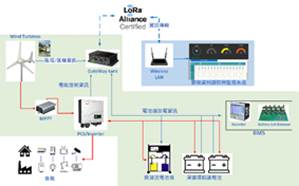
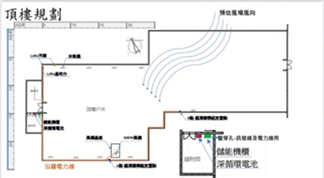
In the initial phase, an experimental test site will be established on the rooftop of the Department of Mechanical Engineering building at the university’s main campus. This setup will integrate multiple small horizontal-axis wind turbines and solar panels (with a total expected capacity of several kilowatts) as energy generation sources. The generated power will be stored in three types of energy storage systems—deep-cycle lead-acid batteries, lithium-ion batteries, and vanadium redox flow batteries. Among these, the redox flow battery is expected to become the main storage technology in the future due to its high charge–discharge efficiency, long lifespan, environmental friendliness, scalability, and excellent safety characteristics.
At this stage, the primary objective is to integrate various generation and storage systems, collect data wirelessly, and conduct remote monitoring to test and adjust the stability of the backend control system. In the mid-to-late phases of the project, an application-oriented field will be developed by integrating medium-sized energy storage facilities with the university’s existing 19.8 kW horizontal-axis wind turbine and nearby solar panels. Using mature wireless transmission and remote energy management systems, the project will implement real-world applications of hybrid renewable energy generation and storage. Furthermore, if the nearby Marine Energy Testing Site requires energy storage support, it can be incorporated into this system, forming a comprehensive marine renewable energy demonstration base that integrates wind, solar, and wave energy generation and storage.
Sustainable Impact: The university established an integrated renewable energy and storage demonstration site to advance research on marine-based clean energy systems. Combining wind, solar, and ocean energy sources, the project integrates multiple energy storage technologies—including lead-acid, lithium-ion, and vanadium redox flow batteries—to enhance power stability and overall energy efficiency. Through a wireless data acquisition and remote energy management system, real-time monitoring and system performance evaluation are conducted. In its later phase, the project will integrate medium-scale storage devices with the campus’s existing 19.8 kW wind turbine and solar panels, linking to the offshore ocean energy testing platform to form a comprehensive generation–storage–management system. This initiative contributes to sustainable energy innovation and regional energy resilience, exemplifying the university’s leadership in developing practical, scalable solutions for renewable energy integration. It directly supports SDG 7.4.3 — providing industrial services that enhance energy efficiency and promote clean energy technologies.
離岸風電與波浪能源都屬於海洋能源的一環,具有間歇性與季節變化的特性,為有效運用這些發電能量又兼具區域供電的的穩定性,儲能設備的配置與監控就變成非常重要的議題。本校位於臺灣東北角海岸,每年秋季後高氣壓南下,伴隨前緣的冷鋒面通過東海到達臺灣附近海域時,即帶來東北季風,其風力常相當強勁。而學校濱海校區與基隆嶼之間的海洋能測試場,經過多年的準備,現在也蓄勢待發。在這種得天獨厚的環境中,非常適合發展多元再生能源的儲能場域,並進行能源管理系統的建構與應用。初期利用位於校本部機械工程系館頂樓建構實驗型場域,以複數小型水平風機和太陽能板(預計約達數千瓦的發電容量)做為創能的來源,結合深充放鉛酸電池、鋰電池與全釩液流電池三種電池做為儲能裝置,其中液流電池因為具有充放電效率高、電池壽命長、對環境無害、儲電量容易擴充、尤其無安全顧慮等優勢,未來將是儲電裝置的主力。這個時期,主要目標是整合多元的創儲能裝置,透過無線數據的收集與遠端監控,測試與調整後台系統的穩定性。計畫中後期將建構應用型場域,此時導入中型儲能設備與本校現有之19.8 千瓦水平風機和周邊之太陽能板結合,利用已經成熟的無線傳輸設備與遠端能源管理系統,進行創儲能場域的實際應用,此時鄰近的海洋能測試場若有儲能需求,亦可加入成為包含風、光、海完整的海洋能源創儲能展示基地。
永續影響力: 本校以發展多元海洋再生能源儲能技術為核心,建立校內「創儲能示範場域」,整合風能、太陽能與海洋能,並結合多種儲能設備(含鉛酸電池、鋰電池及全釩液流電池),以提升能源使用效率與供電穩定性。研究團隊運用無線數據收集與遠端能源管理系統,進行即時監測與系統穩定性測試,並計畫於後期導入中型儲能裝置,與校內風機與太陽能板串聯,構建具實際應用功能之創儲能場域,最終串聯海洋能測試平台,打造兼具創能、儲能與管理的海洋能源展示基地。此計畫有助於推動再生能源整合與區域能源自給,具體實踐 SDG 7.4.3(提供產業能源效率與潔淨能源技術服務) 之永續目標。
- Research on innovative nearshore cabin wave energy harvesting system 創新型近岸艙室波浪能擷取系統研究
Previous nearshore wave energy conversion mechanisms are typically either overtopping type or oscillating water column (OWC) systems combined with air chambers. Elhanafi et al. (2016) conducted numerical simulations and experimental analyses of OWC systems, showing that the air chamber could capture approximately 12.7% of the incident wave energy as kinetic energy. Similarly, Kuo et al. (2017) presented a nearshore caisson breakwater OWC system, in which the air chamber captured around 5% of the incident wave energy as air kinetic energy. Typically, Well’s turbines are installed at the air chamber outlets, with power conversion efficiencies ranging from 0.4 to 0.7. Consequently, the system of Elhanafi et al. (2016) could convert only about 5.08% to 8.89% of the wave energy into electricity, while that of Kuo et al. (2017) achieved merely 2% to 3.5% conversion efficiency. In summary, the proportion of incident wave energy transformed into air kinetic energy through traditional oscillating air chambers is relatively low.
Few previous nearshore wave energy systems directly harness the fluid kinetic energy from the wave-induced inflow and outflow of the oscillating air chamber. Therefore, this study proposes the concept of installing a nozzle-diffuser duct (NDD) within the caisson to channel wave energy into the duct and directly extract fluid kinetic energy from within it. Preliminary simulations show that the reflected wave energy accounts for about 59% of the incident energy, while the kinetic energy entering the duct reaches nearly 41%. Thus, if a hydro turbine is placed within the NDD to directly capture the inflow and outflow kinetic energy, the potential for wave energy extraction is expected to be substantial.
The fundamental concept of this study is to establish a reservoir tank near the shore, with a nozzle-diffuser duct strategically positioned on the wave-facing breakwater to guide wave flows into and out of the reservoir. Unlike conventional OWC systems that utilize air kinetic energy, this approach places a hydro turbine inside the duct to directly harvest the fluid kinetic energy. Through numerical simulations, this study integrates optimization results with suitable hydro turbine designs to perform simulations of wave energy extraction. The performance of conventional horizontal-axis and vertical-axis hydro turbines will be compared in terms of power take-off (PTO) efficiency. Experimental measurements will be conducted to validate the numerical results, ultimately proposing an innovative, high-efficiency nearshore reservoir-type wave energy harvesting geometry.
Sustainable impact : This project introduces an innovative nearshore wave energy conversion system utilizing a nozzle–diffuser duct (NDD) with integrated hydro-turbines to overcome the low efficiency of conventional oscillating water column (OWC) systems. Through comprehensive numerical simulations and experimental validation, the research optimizes the NDD geometry to maximize wave energy capture and compares the performance of horizontal- and vertical-axis hydro turbines.
Results demonstrate that the NDD design significantly increases the proportion of incident wave energy converted into mechanical power, offering a high-efficiency and low-loss solution for nearshore renewable energy systems. By advancing the understanding of wave–current dynamics and direct hydrodynamic energy extraction, this study contributes to the development of sustainable offshore energy technologies and supports industrial adoption of clean marine power. The project aligns with SDG 7.4.3 — providing industrial services that enhance energy efficiency and promote clean energy technologies.
前人的近岸波浪發電機制,或為漫頂式,或為振盪水柱結合空氣室。Elhanafi et al. (2016)對OWC進行數值模擬與實驗量測分析,其空氣室可擷取的動能約占入射波能的12.7%;Kuo et al. (2017)亦發表了其規劃設計的近岸沉箱防坡堤OWC系統,其空氣室可擷取空氣動能約占入射波能的5%。一般空氣室出口放置Well’s turbines,其發電效能約為0.4 到0.7。據此,Elhanafi et al. (2016)的系統僅能將 5.08%到8.89%的波能轉為電能,而Kuo et al. (2017)的系統則僅可將2%到3.5%的 波能轉為電能;簡言之,上述傳統振盪空氣室出口空氣動能所占入射波能的比例並不高。前人的近岸波浪發電機制,鮮有機制是直接擷取波流進出振盪空氣室的流體動能。為此,我們提出構想於Cassion設置一導流罩(nozzle-diffuser duct, NDD),引導波能進入此導流罩,並從導流罩內直接擷取流體動能。我們做了初步模擬,發現反射波能約佔入射波能的59%,而進入導流罩的動能高達近41%,因此如果於NDD置放水渦輪機直接擷取進出NDD的流體動能,預期可擷取的波能潛勢將非常可觀。
本研究基本構想為於近岸設置一儲存槽池(reservoir tank),迎浪防坡堤適當處設置導流罩以導引波流進出儲存槽。波浪能截取方式有別於傳統振盪水柱結合空氣室的空氣動能,而是於導流罩內置放水渦輪機,直接截取進出導流罩內的流體動能。研究藉由數值模擬,結合最佳化結果與適當的水渦輪機,進行水渦輪機波能擷取數值模擬,並比較傳統型水平軸式與垂直軸式水渦輪機動力輸出(power take-off, PTO)效率;進行實驗量測,以驗證數值模擬的成果,並最終能提出創新型的高效能近岸槽池波浪能擷取幾何設計。
永續影響力: 本研究針對近岸波浪能發電效率低落的問題,提出以導流罩(Nozzle-Diffuser Duct, NDD)結合水渦輪機的新型波能擷取機制,取代傳統振盪水柱(OWC)氣室方式。研究以數值模擬與實驗驗證,分析不同幾何設計下的波能轉換效率,並比較水平軸與垂直軸水渦輪機之輸出效能。結果顯示,導流罩設計能顯著提升入射波能的擷取比例,具備高效能與低損耗特性。本研究不僅創新海洋能轉換技術,亦能促進離岸再生能源應用及產業發展,符合 SDG 7.4.3 工業能效服務之精神,展現大學在推動清潔能源科技研發與應用的關鍵角色。

- Analysis of underwater cathodic protection for offshore wind power underwater foundations 離岸風電水下基礎之水下帶陰極保護分析
Taiwan is located in a subtropical region characterized by high temperatures and strong solar radiation. Being surrounded by the sea, the island also experiences high relative humidity and elevated salt content in the air. Consequently, the marine environment has a significant impact on the corrosion resistance and durability of offshore wind turbine materials and marine structures. Offshore wind turbines require stringent anti-corrosion measures. Therefore, how to effectively assess the material performance of wind turbine towers and determine appropriate maintenance and improvement cycles is crucial for reducing component damage and regular maintenance costs, enhancing economic efficiency, and extending the service life and reliability of the entire system.
Sustainable impact : This study focuses on optimizing corrosion protection and maintenance strategies for offshore wind turbine towers operating in Taiwan’s subtropical marine environment, characterized by high temperature, humidity, and salinity. The research team investigated the failure mechanisms of conventional aluminum thermal-sprayed coatings and thick organic systems under severe thermal expansion and saltwater exposure.
Building on these findings, new high-adhesion, salt-resistant coating and surface treatment technologies were developed to enhance structural durability and corrosion resistance. These innovations extend the lifespan of offshore wind turbine components, reduce maintenance frequency, and improve operational efficiency—thereby enhancing the overall energy performance of wind power systems.
By integrating materials engineering with renewable energy applications, this project provides direct technological services to the offshore wind industry, aligning with SDG 7.4.3 — delivering industrial services that enhance energy efficiency and promote clean energy technologies.
台灣地處亞熱帶,天候溫度高及日照強度大,而且四週臨海,相對濕度與空氣中含鹽量均高,因此環境對離岸風力發電機及海上結構物腐蝕結構材料之耐久性影響甚鉅。離岸風力發電機的防蝕要求高,如何有效評估風機塔架材料使用特性及維護改善週期,節省零件破損、定期維修費用與增進經濟效益,延長機組材料的使用壽命及可靠度。本團隊已於先前研究中,離岸風機有別於傳統陸域風機,塔架處於海洋惡劣環境必須有較高的抗鹽害、耐應力腐蝕與抗沖蝕等特性。傳統塔架為解決鋼材飛沫帶與潮汐帶所致環境劣化,一般採行熱噴覆鋁材加上含有石英玻璃鱗片或玻璃纖維的厚膜有機塗裝進行保護,然而我國位處亞熱帶地區,在海域上塔架表面巨大溫差及異材熱膨脹差異,造成保護層與塔架鋼材提早剝離,高鹽分水氣滲入導致塔架嚴重腐蝕與應力腐蝕。
永續影響力: 本研究針對臺灣高溫、高濕、高鹽害之亞熱帶海洋環境,探討離岸風力發電機塔架防蝕材料與維護週期之最佳化策略。團隊針對風機塔架在飛沫帶與潮汐帶易產生腐蝕的問題,分析傳統熱噴覆鋁材及厚膜塗裝系統在溫差與材質膨脹差下的失效機制,進一步研發具高附著性與抗鹽霧性能的新型防蝕塗層與表面處理技術。研究成果可提升風機結構耐久性、延長使用壽命並降低維護成本,協助離岸風電產業提高設備可靠度與能源轉換效率。此計畫展現本校在再生能源技術與材料防蝕工程領域的創新應用,具體實踐 SDG 7.4.3 工業能效服務,促進潔淨能源產業之永續發展。
