17.3.1-17.3.17
1. Early Career Ocean Professional (ECOP) Listening Sessions
早期職業海洋專業人士 (ECOP)聆聽工作坊
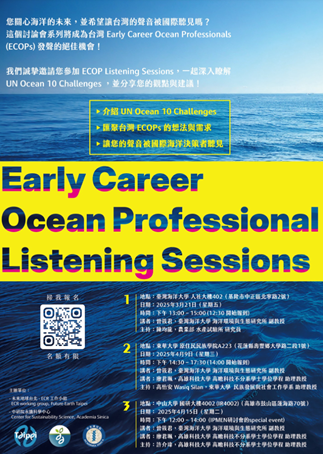
The listening sessions revealed that youth from diverse backgrounds in Taiwan—ECOPs, Indigenous youths, and young Ocean Educators—share strong concerns about marine pollution and ecosystem degradation. Across all groups, ‘Challenge 1: Understand and beat marine pollution' and ‘Challenge 2: Protect and restore ecosystems and biodiversity' were consistently ranked among the top three priorities. While the third priority varied, each group brought unique perspectives shaped by their experiences and professional or cultural contexts. All participants acknowledged that Taiwan has demonstrated significant strengths in marine ecosystem restoration and possesses the capacity to contribute valuable expertise and technology to global ocean sustainability. However, over 60% of ECOPs and Indigenous youth participants had never heard of the UN Ocean Decade, largely due to Taiwan's exclusion from formal UN processes. Despite Taiwan's fisheries and shipping sectors ranking among the top globally, it remains excluded from many international negotiations, resulting in a critical gap in global ocean data and perspectives. The participants called for more inclusive and culturally grounded ocean governance that integrates the knowledge and efforts of non-state actors, including Indigenous communities. Their collective messages urge that Taiwan's marine expertise and perspectives be meaningfully included in international dialogues—ensuring ocean sustainability efforts reflect diverse voices and local realities.
Sustainable Impact:This dialogue gathered Taiwanese youth from diverse backgrounds—environmental advocates, Indigenous leaders, and marine educators—to discuss ocean pollution, ecosystem degradation, and inclusive governance. Participants recognized Taiwan's strong technical capacity in marine ecosystem restoration but highlighted its exclusion from UN Ocean Decade processes, resulting in significant data and representation gaps. Over 60% of attendees had never heard of the UN Ocean Decade, underscoring the need for greater international engagement. The forum called for culturally grounded and inclusive ocean governance that integrates Indigenous knowledge and non-state actors' expertise. It emphasized Taiwan's potential contribution to global marine sustainability through science, education, and policy innovation. This initiative aligns with SDG 14 (Life Below Water), promoting conservation and sustainable management of ocean resources; SDG 17 (Partnerships for the Goals), strengthening global collaboration; and SDG 4.3.5, enhancing educational awareness and professional capacity for sustainable ocean action.
聆聽環節發現,來自不同背景的台灣青年——環保青年、原住民青年和青年海洋教育者——都對海洋污染和生態系統退化有著強烈的擔憂。在所有群體中,「挑戰一:了解並戰勝海洋污染」和「挑戰二:保護和修復生態系統與生物多樣性」始終位列三大優先事項之列。雖然第三個優先事項各不相同,但每個群體都根據自身的經驗、專業或文化背景提出了獨特的觀點。所有參與者都承認,台灣在海洋生態系統修復方面展現出顯著優勢,有能力為全球海洋永續發展貢獻寶貴的專業知識和技術。然而,超過 60% 的環保青年和原住民青年參與者從未聽說過聯合國海洋十年,主要是因為台灣被排除在聯合國正式進程之外。儘管台灣的漁業和航運業在全球名列前茅,但它仍然被排除在許多國際談判之外,導致全球海洋數據和觀點有重大缺口。與會者呼籲更具包容性、以文化為基礎的海洋治理,整合包括原住民社群在內的非國家行為體的知識和努力。他們共同呼籲,將台灣的海洋專業知識和觀點有效納入國際對話,確保海洋永續發展努力反映多元聲音和本土現實。
永續影響力:本活動匯集來自不同背景的台灣青年,包括環保青年、原住民青年及海洋教育者,共同探討海洋污染、生態系退化及多元文化參與等議題。與會者一致認為,台灣在海洋生態修復上具備專業能力與技術優勢,應積極參與全球海洋治理。然而,超過六成的青年未曾聽聞「聯合國海洋十年」,顯示台灣在國際海洋永續進程中被邊緣化的困境。與會者呼籲建立更具包容性的國際對話平台,納入原住民與非國家行為者的知識與經驗,並促進海洋教育與文化治理的融合。此舉不僅推動跨文化合作與教育提升,也體現SDG 14「海洋生態永續」、SDG 17「夥伴關係」、及SDG 4.3.5「教育與專業能力增能」之核心精神。
Evidence:
https://www.facebook.com/photo.php?fbid=691210616572785&id=100070515593897&set=a.220356423658209
2. Cold air steam condenser tube rupture simulation test and improvement suggestions Condenser tube rupture engineering consultation and troubleshooting plan
冷空氣蒸汽冷凝器破管模擬試驗及改善建議凝器破管工程諮詢與排除計畫
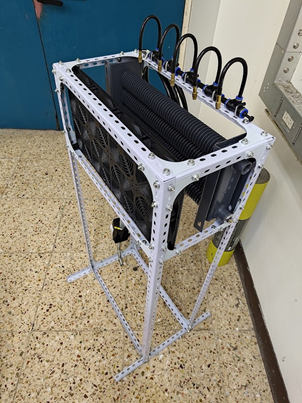
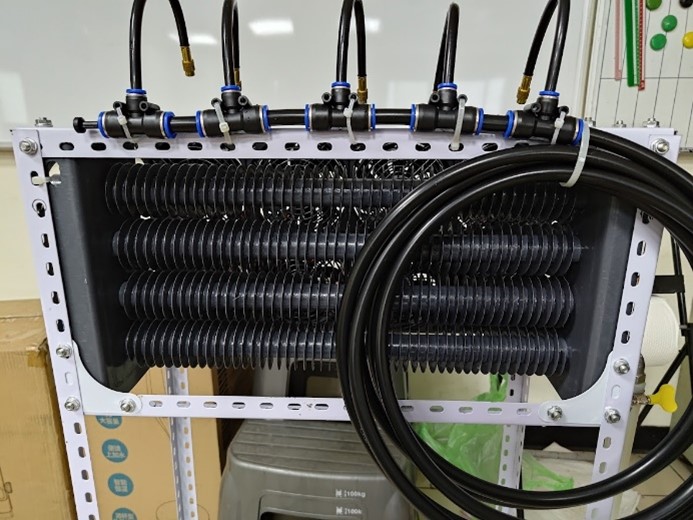
The Neihu Waste Incineration Plant of the Environmental Protection Administration of the Taipei City Government was built to address the problem of rapidly increasing waste in Taipei City as the city develops. The plant is the first large-scale cogeneration plant in Taiwan that can use waste to generate steam and electricity. By incinerating combustible materials, the volume of garbage is reduced to 10% of its original volume. The fly ash is stabilized and sent to a sanitary landfill for storage. The bottom ash is sold through tender as fill material for construction or road paving. The high-temperature, high-pressure steam generated drives a steam turbine to generate electricity, which can be used for factory power or sold to Taipower Company, achieving the goals of waste resource recycling and waste reduction and stabilization. Some of the heat exchanger tubes in the plant's air-cooled steam condenser were broken and leaking. To prevent similar tube ruptures from continuing to occur and gradually expanding, affecting the operation of the entire incinerator, the laboratory of the Department of Marine Engineering at National Taiwan Ocean University was commissioned to assist in resolving the issue.
Sustainable Impact:The Neihu Incineration Plant of the Taipei City Environmental Protection Bureau, Taiwan's first high-efficiency cogeneration waste-to-energy facility, processes waste to reduce volume, recover energy, and promote circular economy practices. When pipe leakage occurred in its steam condenser system, the plant commissioned the Department of Marine Engineering at National Taiwan Ocean University (NTOU) to assist with diagnosis and technical improvement. This collaboration exemplifies how academic expertise contributes to solving real-world industrial challenges while providing students with hands-on experience in sustainable engineering. It demonstrates the integration of education, research, and practice toward cleaner production and energy efficiency. The project aligns with SDG 17.3 (industry-academia collaboration for sustainability), SDG 4.3.2 (practical learning and industrial engagement), and SDG 4.3.3 (bridging education with applied innovation).
臺北市政府環保局內湖垃圾焚化廠是為解決臺北市隨著都市發展而急速增加的垃圾,該廠為國內首座大型高效能利用垃圾焚燒產生蒸汽及發電的汽電共生廠。垃圾透過焚燒可燃物質的方式,減少體積至原來的10%,將飛灰穩定化後送至衛生垃圾掩埋場堆置; 底渣則招標出售作為建築或道路鋪設的填充材料,產生的高溫高壓蒸汽則帶動蒸汽渦輪機產生電力,可供廠區電力使用或出售給台電公司,達到廢棄物資源循環再利用,同時垃圾減量與安定化的目標。 該廠廠內氣冷式蒸汽冷凝器管的部分熱交換器管發生破管洩漏,為避免類似破管情形持續發生,並逐步擴大,影響整個焚化爐的運作,因此委託國立臺灣海洋大學輪機工程學系實驗室協助解決。
永續影響力:臺北市政府環保局內湖焚化廠作為全國首座高效能汽電共生廠,透過焚燒廢棄物進行減量與再利用,實現循環經濟與能源回收。然而因蒸汽冷凝器破管問題,為避免系統性損害,該廠特別委託國立臺灣海洋大學輪機工程學系協助檢測與改善。此次合作不僅展現大學科研團隊於能源與工程維護領域的專業能力,也提供學生實際參與產業問題解決的機會,深化理論與實務結合。此案落實SDG 17.3「強化產學合作推動永續技術」、SDG 4.3.2「促進學生實務經驗學習」、及SDG 4.3.3「提升教育與社會連結的應用學習」。
Evidence:
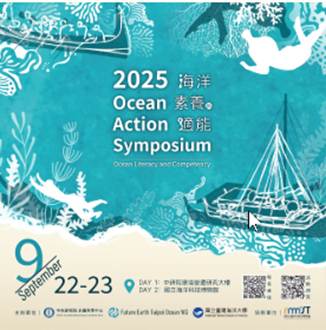
3. 2025 Ocean Action Symposium
海洋素養與適能
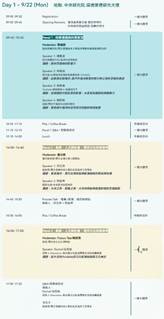
What is your vision of "ocean literacy"? Ocean literacy is more than just textbook knowledge; it's a way of looking at the world—it influences our values and shapes our motivation to act. Have you ever considered this? Every breeze, every current, every ship, every story of the sea—they are inextricably linked to our lives and culture. How do Taiwan's tides and ocean currents affect residents of the island and its outlying islands? How have shipbuilding and navigational technology shaped Taiwan's unique maritime culture? And what significance do coral conservation efforts have for the marine environment? This year's symposium invited scholars from across disciplines, educators on the front lines, representatives from the marine restoration industry, and marine cultural activists to share their insights! The symposium focused on themes of science communication and popular science education, marine culture and island society, and social participation and marine restoration.
Sustainable Impact:The "Ocean Literacy" symposium redefines ocean awareness as more than academic knowledge—it is a worldview that connects science, culture, and action. The event invited interdisciplinary experts, educators, and marine restoration practitioners to explore three key themes: science communication and public education, marine culture and island society, and social participation in ocean restoration.Through discussions on topics such as coral conservation, shipbuilding traditions, and community-based marine stewardship, the symposium encouraged participants to view the ocean as an integral part of life and identity.This initiative not only enhances public understanding of marine sustainability but also strengthens collaborations among academia, education, and industry.It exemplifies SDG 14 (Life Below Water) by promoting ocean conservation awareness, and SDG 17 (Partnerships for the Goals) by fostering multi-sector partnerships for sustainable ocean development and education.
你對「海洋素養」的想像是什麼? 海洋素養,不只是課本上的知識,更是一種看待世界的方式——它關係著我們的價值觀,也形塑了我們的行動力。 你有想過嗎?每一次吹來的海風、流動的洋流,每一艘航行的船隻、每一段海上故事,都與我們的生活與文化息息相關。台灣的潮汐與洋流,如何影響本島與離島的居民?造船與航海技術,如何塑造出台灣獨特的海洋文化?珊瑚保育的努力,對海洋環境又有什麼意義? 今年的座談邀請跨領域的學者、站在第一線的教育者、致力海洋復育產業代表與海洋文化行動者,帶來精彩的分享! 座談會主題聚焦在——科學溝通與科普教育、海洋文化與島嶼社會、社會參與與海洋復育
永續影響力:本次「海洋素養」主題座談強調從教育、文化、產業與社會參與等面向深化全民的海洋意識。活動以「你對海洋素養的想像是什麼?」為引言,鼓勵民眾重新思考海洋與人類生活的連結,將海洋視為理解世界與行動的出發點。座談邀集跨領域專家,包括海洋教育學者、文化研究者、海洋復育產業代表及第一線教育工作者,探討「科學溝通與科普教育」、「海洋文化與島嶼社會」及「社會參與與海洋復育」三大主題。內容涵蓋從海洋環境保育、珊瑚與生態修復、航海與造船文化,到地方社會行動等多層面議題。此座談會透過多元對話與知識交流,深化社會大眾對海洋永續的理解,並強化學術、教育與產業間的夥伴合作,實踐 SDG 14(保育與永續利用海洋資源) 與 SDG 17(強化全球夥伴關係) 的精神,推動從知識、文化到實踐的「海洋公民素養」。
Evidence:
https://www.oceanactionsymposium2025.com/
4. Professional Training for Seafarers Begins
船員專業訓練開課
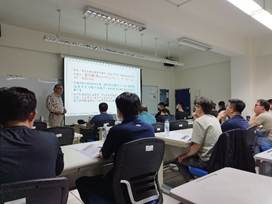
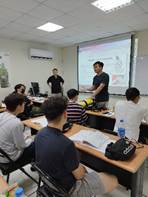
The center, entrusted by the Maritime Port Bureau(MOTC) , handles various seafarer training courses. Currently, the training programs are divided into subsidized, self-funded, and in-school certification courses.This year, the IGF Basic and Advanced Training Courses have also been added. These courses are currently mostly conducted as exclusive classes arranged directly by shipping companies.
Sustainable Impact: Commissioned by the Maritime and Port Bureau of the Ministry of Transportation and Communications, the university’s maritime training center conducts professional seafarer programs that align with SDG 4.3.3.
Through institutional collaboration with government authorities, the center advances sustainable maritime development by offering both public and private training courses. The inclusion of IGF Code basic and advanced training reflects a proactive response to global trends in green shipping and maritime safety.
These programs exemplify SDG 4.3.3, promoting lifelong learning and vocational education while supporting the upskilling of maritime professionals. By integrating policy objectives, safety standards, and energy transition goals, the initiative strengthens public–academic partnerships and contributes to sustainable capacity building in the maritime sector.
本中心受交通部航港局委託辦理各項船員訓練課程,目前中心訓練課程分為公費、自費及在校取證課程。今年度更增加了IGF基本訓練及進階訓練課程,此課程目前多由航運公司直接包班上課。
永續影響力:本中心受交通部航港局委託辦理船員訓練課程,屬於SDG4.3.3 的實踐案例。課程內容結合政府政策推動與專業技能培訓,展現高等教育機構與政府夥伴共同促進海事安全與永續發展的協作關係。新增之 IGF 基本與進階訓練課程回應國際永續航運趨勢,並促進職場安全與能源轉型,呼應 4.3.3 對終身學習與職能提升的重視,強化航運產業永續人才培育。
Evidence:
https://usr.ntou.edu.tw/var/file/90/1090/img/1658/894886653.pdf